
This Winery Is Permanently Closed.
Winery Rating
Located at:
620 NE Third Street, McMinnville, OR 97128
Reservation Required
Price Range For Tasting
Troon Vineyard operates an estate winery and farm in Southern Oregon’s Applegate Valley, along with a Biodynamic Wine Bar on Third Street in downtown McMinnville. The McMinnville location provides access to the estate’s wines without requiring the drive to its vineyard near Grants Pass. Its portfolio emphasizes varieties such as Syrah, Grenache, Mourvèdre, Tannat, Vermentino, Roussanne, and Viognier, offering a noticeably different perspective from the Pinot Noir and Chardonnay commonly associated with the Willamette Valley.
The winery’s identity is closely connected to certified biodynamic and regenerative agriculture. Troon is currently listed by Demeter as a certified biodynamic vineyard and winery, while the Regenerative Organic Alliance includes the estate in its Gold-level producer directory. These certifications apply to more than a marketing position; they shape vineyard management, animal care, soil health, labor standards, and the permitted approaches used in the cellar.
Dick and Virginia Troon began planting the property in 1972 after using the land primarily for cattle grazing. The grapes were initially sold to other producers before a barn was converted into a winery and estate production began. The vineyard’s history places it among the early commercial wine properties in Southern Oregon, well before the Applegate Valley received formal AVA recognition in 2000.
Dr. Bryan and Denise White acquired the property after visiting the Applegate Wine Trail in 2017. Under their ownership, general manager Craig Camp and the agricultural and winemaking teams expanded the estate’s commitment to organic, biodynamic, and regenerative farming. Camp brought more than three decades of experience across importing, distribution, marketing, viticulture, and wine production, including work in Italy, Napa Valley, the Willamette Valley, and Southern Oregon.
The change was not limited to obtaining certifications. The estate developed into a diversified farm that includes grapevines, pasture, fruit, vegetables, livestock, pollinators, and composting programs. This broader agricultural system supports Troon’s stated goal of treating the property as an interconnected farm rather than a vineyard monoculture.
Current winery materials identify Nate Wall as winemaker and Micah Wagner as assistant winemaker. Wall joined Troon in 2018 after working in Virginia and the Willamette Valley. His education in molecular microbiology and environmental engineering informs a cellar approach that places considerable attention on native microorganisms, spontaneous fermentation, and microbial stability.
Wagner joined the production team in 2024 after gaining experience in Brazil, Australia, New Zealand, Sicily, California, and Oregon. Her background includes work at a biodynamic winery and management of a custom-crush operation. Together, Wall and Wagner work within the farming and winemaking framework shaped by Camp and director of agriculture Garett Long.
The cellar practices are intentionally restrained. Fermentations begin without commercial yeast, incoming fruit chemistry is not routinely corrected, and most wines receive only a small sulfur addition near bottling. The winery works with neutral barrels, concrete, amphorae, and other vessels, while also using techniques such as co-fermentation, skin contact, and whole-cluster fermentation when appropriate. New oak is generally avoided so that oak flavor does not dominate the finished wines.
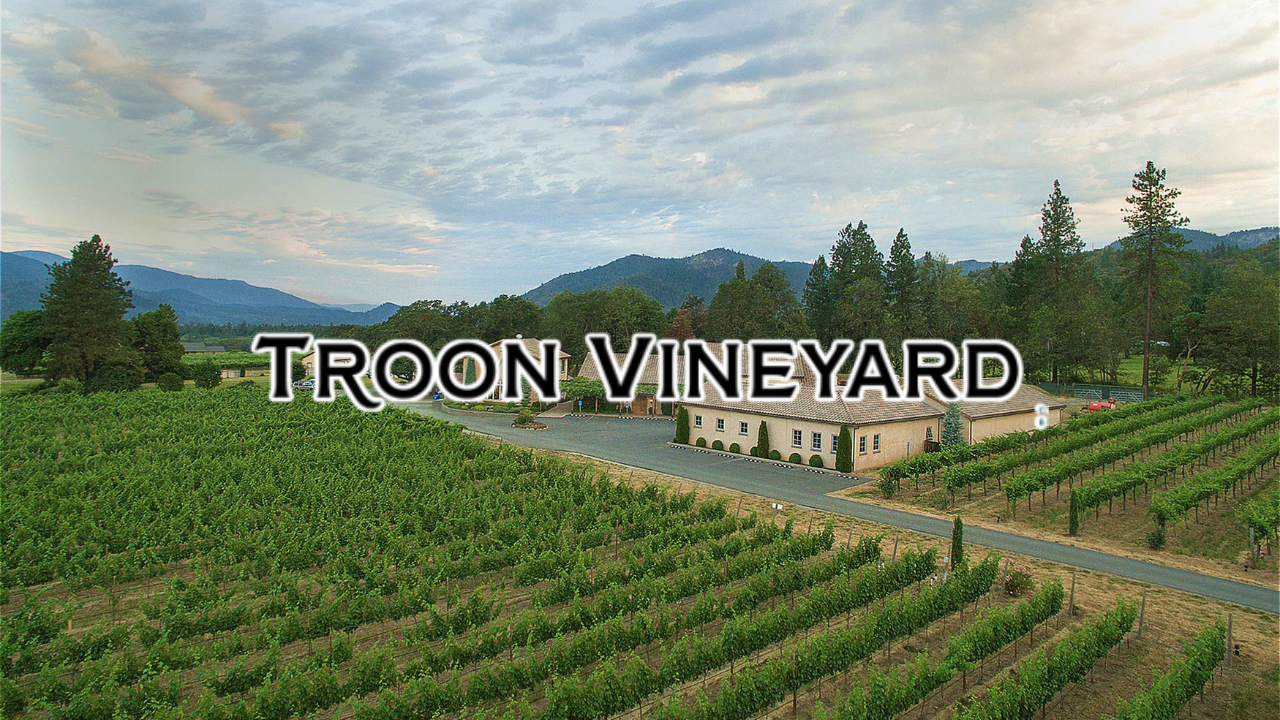
The estate vineyard is located on Kubli Road near Grants Pass, above the Applegate River and within the Siskiyou Mountain landscape. The property includes the winery, tasting room, gardens, lawns, vineyard blocks, farm animals, and agricultural areas. Visitors to the estate can expect a rural vineyard experience with outdoor space, mountain views, picnic areas, and direct exposure to Troon’s broader farming program.
The McMinnville Biodynamic Wine Bar is a separate experience. Located at 620 NE Third Street, it functions as an urban tasting room and wine bar rather than an estate visit. The space uses contemporary furnishings, communal tables, bar seating, and smaller conversation areas. Its downtown location makes it practical for visitors exploring McMinnville on foot, while the extended hours allow for tastings later in the day than many traditional winery tasting rooms.
Troon’s portfolio is unusually broad for an Oregon estate. Current releases include white, pink, amber, sparkling, and red wines made from varieties with connections to the Rhône Valley, Languedoc, and southwestern France. Vermentino, Roussanne, Syrah, Mourvèdre, Tannat, Grenache, and Négrette appear alongside blends and experimental bottlings fermented or aged in amphorae.
The wines poured during our visit included several older bottlings that demonstrated the winery’s development over time. The 2019 Kubli Bench Amber combined 74 percent Riesling, 16 percent Vermentino, and 10 percent Viognier in a skin-contact format. The 2019 Côtes du Kubli Rouge brought together 72 percent Syrah and 28 percent Grenache, while Druid’s Fluid represented the winery’s flexible approach to blending estate-grown red varieties.
Old Vine Meritage and Zinfandel provided a connection to an earlier period in Troon’s history. Zinfandel was among the original varieties associated with the property, while the current program is more closely centered on Rhône and Mediterranean grapes suited to the warmer, dry conditions of the Applegate Valley. The resulting range is varied, but it remains tied together by native fermentation, limited cellar additions, fresh acidity, and restrained oak influence.
Our July 12, 2026 visit took place at the McMinnville wine bar, where Kim handled the tasting. The service was informed and well paced, providing enough background on the farming and production methods without allowing the technical discussion to overwhelm the wines. The format also allowed older bottlings and changing blend compositions to be discussed in the context of Troon’s broader transition.
Visitors may choose curated flights or order wines by the glass. The wine-bar format feels less structured than a formal seated estate tasting, making it suitable for both a full portfolio exploration and a shorter stop during an afternoon in downtown McMinnville. Reservations are encouraged but not required, and the McMinnville location is currently open daily from noon until 8 p.m.
Troon offers two primary membership levels, each with a red-only option. The Applegate Club includes four bottles per quarterly release, a 10 percent discount on most wine purchases, a 20 percent case discount, access to limited and library wines, and complimentary tastings for the member and as many as four guests.
The Siskiyou Club increases each quarterly allocation to one case and provides a 15 percent discount on most wine purchases and 25 percent on cases. Both memberships permit allocation changes of equal or greater value, provide event benefits, and include complimentary tastings at the Applegate Valley and McMinnville locations. The combination of flexible allocations, library access, and benefits usable at both tasting rooms gives the membership practical value for regular purchasers.
The Applegate Valley is located within Southern Oregon’s broader Rogue Valley region and has a warmer, drier growing season than the Willamette Valley. Differences in elevation, exposure, and distance from the Pacific create conditions capable of supporting both moderate- and warm-climate varieties. The Kubli Bench area contains well-draining alluvial soils that can include weathered granite carried from the surrounding mountains.
Troon’s McMinnville location makes this regional contrast easy to understand. Rather than presenting another interpretation of Willamette Valley Pinot Noir, it introduces visitors to Southern Oregon varieties, skin-contact wines, amphora fermentation, and Rhône-oriented blends within one of Oregon’s busiest wine towns.
Troon Vineyard stands out through the clear connection between its farming program, cellar practices, and finished wines. The McMinnville wine bar provides an accessible introduction to an Applegate Valley estate that would otherwise require several hours of additional travel from the northern Willamette Valley. Its range of varieties, older library bottlings, amber wines, and restrained winemaking offers useful context for understanding the diversity of Oregon wine beyond Pinot Noir.