
This Winery Is Permanently Closed.
Winery Rating
Located at:
511 N 2nd Ave, Walla Walla, WA 99362
Reservation Required
Price Range For Tasting
Located at 511 North Second Avenue in downtown Walla Walla, Corliss takes a patient approach to Washington wine, with extended élevage followed by more than two years of additional bottle aging before release. The winery works with fruit from its estate holdings, including vineyards on Red Mountain and in the Yakima Valley, and emphasizes sustainable farming, individual berry sorting, native yeast fermentation, and rigorous lot selection. Rather than building a broad portfolio, the winery concentrates on a relatively narrow group of structured red wines intended to develop over time. Access is similarly controlled, with wines sold exclusively through the Corliss Registry.
Michael and Lauri Corliss founded the winery in Walla Walla in 1999, establishing the operation in a former bakery building near downtown. Early vintages were approached cautiously, with the first commercial releases ultimately reaching the market in 2008. That extended period between founding and release established a pattern that remains central to the winery today, with significant time devoted to élevage, blending, and bottle maturation before wines are offered for sale. The operation remains closely associated with Michael and Lauri Corliss, who continue to guide the winery’s stylistic direction and standards.
The family’s vineyard holdings expanded substantially after the winery was established. A 33-acre Red Mountain property purchased in 2007 included Cabernet Sauvignon, Merlot, and Cabernet Franc planted as early as 1989. Another 139-acre parcel followed in 2009, where 56 acres were planted predominantly to Bordeaux varieties, with additional Syrah, Grenache, Mourvèdre, and Cinsault. A third Red Mountain parcel was acquired in 2012, while the 50-acre Blackrock Vineyard sits on the eastern side of the Yakima Valley AVA.
Corliss currently presents its winemaking as a collaborative effort rather than identifying a single lead winemaker. Michael and Lauri Corliss remain directly involved in shaping the house style, supported by a team of winemaking professionals and consultant Atelier Melka. The production process includes slow native yeast fermentation in small custom oak and concrete fermenters, extended barrel aging, detailed blending trials, and substantial bottle aging before release. This approach gives the wines considerably more development time at the winery than is common for many Washington producers.
Andrew Trio was an important part of the winery’s earlier modern period and was credited as head winemaker on a number of vintages, including the 2016 releases. His background included winemaking experience in Australia, New Zealand, California, Europe, and Washington, and he worked with consulting winemaker Philippe Melka during his tenure. Trio has since returned to Australia, so describing him as Corliss’s current winemaker would no longer be accurate. The winery itself now emphasizes the collective winemaking team rather than naming a successor.
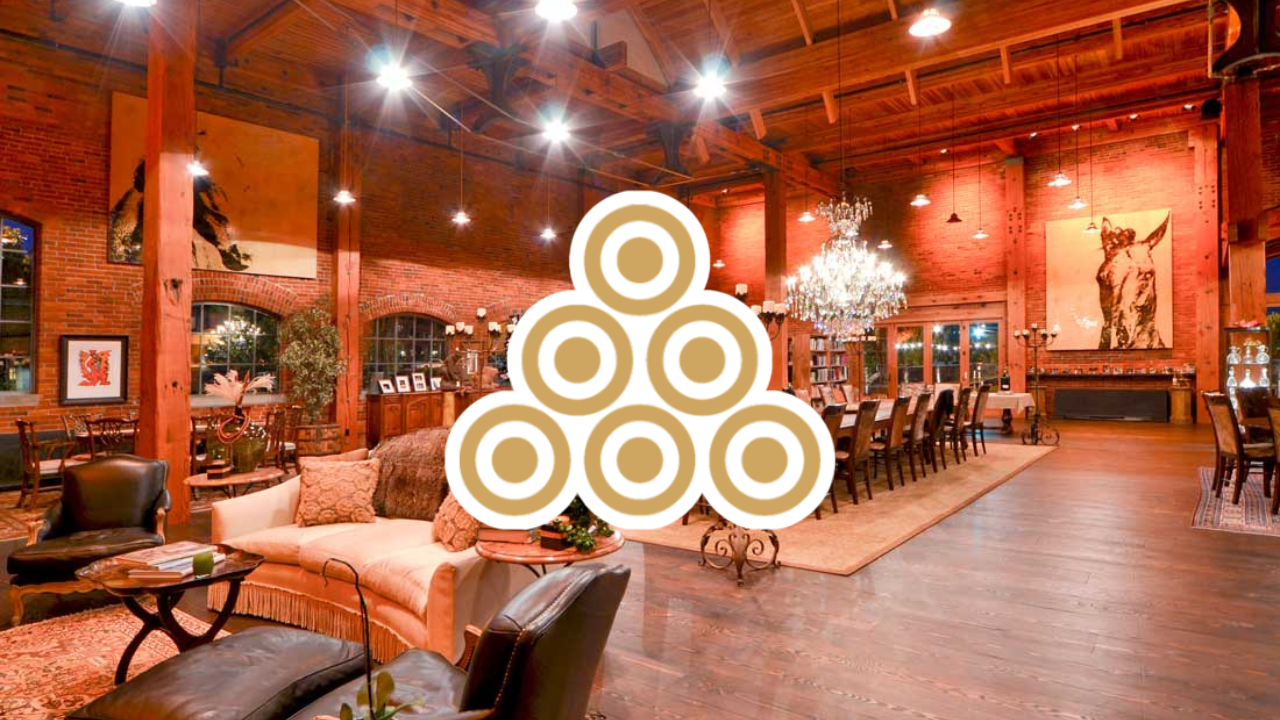
The winery occupies a distinctive brick facility in downtown Walla Walla rather than a conventional vineyard tasting-room setting. Its location places visitors close to the city’s restaurant and tasting-room district while production, cellar work, and hospitality remain integrated into the property. Private tasting appointments can include a tour of the production facility, giving visitors more direct exposure to the fermentation, barrel-aging, and cellar program. The source information does not establish a specific scenic-view component, so Corliss is better characterized by its architecture and production-focused environment than by vineyard panoramas.
The estate vineyards themselves play a significant role in the winery’s identity. Red Mountain provides warmer growing conditions and a strong foundation for Cabernet Sauvignon and other Bordeaux varieties, while Blackrock Vineyard lies in a comparatively cooler section of the Yakima Valley. Corliss hand-picks and hand-sorts its estate fruit, retaining only a portion of the crop for its own wines and selling other fruit to selected Washington producers. Vineyard decisions, including row orientation, airflow management, slope selection, and soil mapping, are treated as part of the wine style rather than simply as agricultural logistics.
The core portfolio centers on Cabernet Sauvignon, Red Wine, and Syrah. These are generally structured, concentrated wines with significant barrel and bottle aging, but the winery’s methodology places equal emphasis on tannin development, freshness, and integration. The current wine program reflects the same measured release schedule seen throughout Corliss’s history, with vintages reaching customers several years after harvest. The winery’s own materials emphasize extended cellar time as an important part of allowing aroma, flavor, texture, and structure to develop before release.
The 2020 Cabernet Sauvignon is sourced from all three estate vineyards and spent 22 months in 65 percent new French oak before bottling. Owen Bargreen awarded the wine 99 points, describing a profile centered on cassis, blackcurrant, boysenberry, licorice, and herbal notes, with substantial concentration and freshness. The wine was released to Registry members in August 2025. It provides a clear example of the winery’s combination of ripe Washington fruit, substantial oak treatment, and extended maturation.
The 2020 Red Wine is a blend of 60 percent Cabernet Franc and 40 percent Cabernet Sauvignon. Jeb Dunnuck awarded it 94 points and noted red, blue, and black fruit along with floral, spice, and graphite characteristics, supported by a concentrated mid-palate and building tannins. Syrah remains the third major component of the portfolio, with the 2021 vintage released in spring 2026. Together, these bottlings keep the lineup focused while allowing differences in variety and vineyard source to remain visible.
Corliss offers a limited number of tastings and requires reservations. The current program includes a Private Tasting & Facility Tour and a Semi-Private Tasting, each structured around guided discussion of the wines, vineyards, vintages, and winemaking approach. Private appointments are hosted exclusively for one group and incorporate the production facility, while semi-private tastings are seated and may include as many as three small groups depending on party size. Library wines can also form part of the experience, giving the format additional relevance for visitors interested in how the wines develop with age.
The winery has also scheduled a limited Fall Release Weekend program for November 6 and 7, 2026, built around the release of the 2021 Cabernet Sauvignon and 2021 Red Wine. Those appointments include guided tastings and selected library vintages. This represents an update from earlier information indicating that tastings were temporarily unavailable because current releases had sold through. Prospective visitors should therefore rely on the winery’s current reservation system rather than assuming the property is closed to tastings.
Corliss does not operate a conventional wine club built around fixed tiers or routine shipment schedules. Instead, wines are distributed through the Corliss Registry, which functions as a mailing-list allocation system and provides members access to releases as they become available. The winery states that its wines are available exclusively to Registry members, making enrollment particularly important for buyers seeking direct access. The tasting-log information also notes Registry invitations to events such as the winery’s release celebrations.
This structure makes the program more about access than recurring club benefits. There are no publicly established membership tiers in the supplied information, and a conventional wine-club rating would therefore be misleading. For collectors who follow specific vintages or want access to older wines and winery events, the Registry model fits the limited-release approach used throughout the operation. Buyers looking primarily for regular shipments, discounts, or a broad list of standardized benefits should understand that this is a different membership model.
Although the winery itself is in Walla Walla, its vineyard program extends across several eastern Washington growing areas. Red Mountain is particularly important to the Cabernet Sauvignon program, while Blackrock Vineyard provides another source within the Yakima Valley AVA. The contrast between warmer Red Mountain sites and the more temperate conditions at Blackrock gives the winemaking team multiple components to work with when building Cabernet Sauvignon and blended wines. This multi-site approach makes Corliss as much an estate-vineyard project as a Walla Walla tasting-room destination.
Corliss occupies a distinctive position in Washington wine through its combination of estate farming, slow cellar development, limited releases, and controlled direct access. Cabernet Sauvignon, Bordeaux-style Red Wine, and Syrah form a focused portfolio built around concentrated fruit, substantial structure, and extended maturation rather than rapid release. The Registry system and reservation-only tasting model reinforce the same deliberate approach found in the winemaking program. For readers interested in cellar-worthy Washington reds and a tasting experience centered on production detail, vineyard sourcing, and mature vintages, Corliss offers a clearly defined and technically focused perspective on the region.