
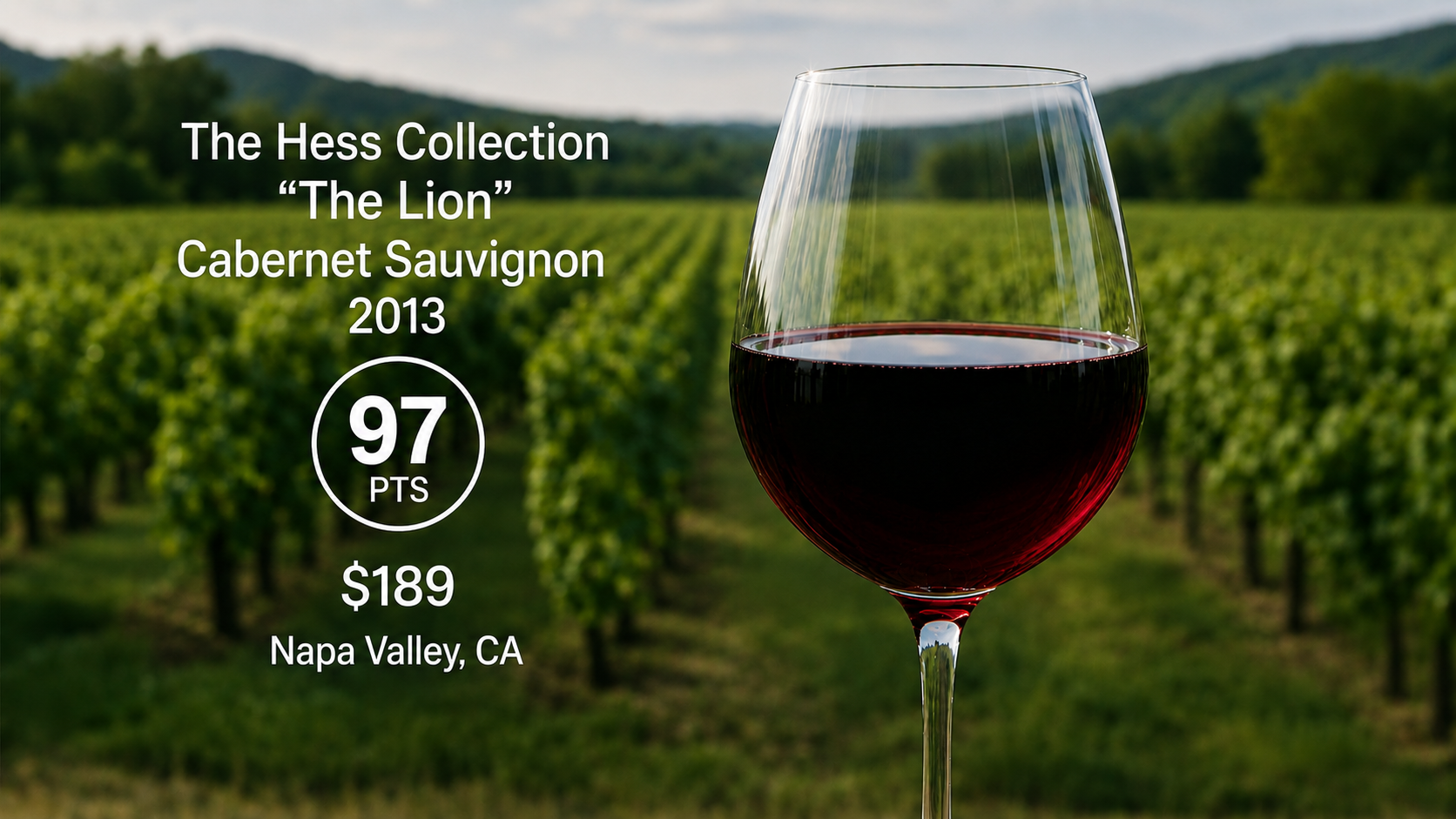
Our Rating

Napa Valley, CA
90% Cabernet Sauvignon, 8% Malbec, 2% Petit Verdot
The 2013 The Lion represents the flagship end of The Hess Collection’s Mount Veeder Cabernet program. Produced from estate-grown mountain fruit, the wine combines substantial concentration with the acidity and tannin needed to support extended bottle development.
Now more than a decade from harvest, the wine has moved beyond its primary-fruit stage without losing its core of blackcurrant, black cherry, and plum. Cedar, tobacco, earth, mocha, and dark chocolate have become increasingly prominent, while the tannins remain firm enough to suggest additional development through the end of the decade.
Donald Hess established The Hess Collection Winery on Mount Veeder in 1978, selecting a historic winery property and focusing on vineyards planted at elevation. The company adopted the Hess Persson Estates name in 2021 to recognize the leadership of the next generation, while The Hess Collection remains one of its principal wine portfolios.
The Lion sits above the winery’s standard Mount Veeder Cabernet Sauvignon as a limited flagship selection. The producer describes the bottling as a wine made from its strongest estate Cabernet lots in selected vintages rather than as an automatic annual release.
The 2013 vintage was produced during Dave Guffy’s tenure directing winemaking for The Hess Collection. Guffy joined the winery in 1999 after studying enology and viticulture and working in California winemaking, with an approach centered on vineyard development, ripe fruit, and structural balance.
No vintage-specific documentation was located confirming additional consulting winemakers for the 2013 release. Later vintages have involved separate collaborative teams, but those arrangements should not automatically be applied to this bottling.
The fruit came from the producer’s estate vineyards on Mount Veeder. The winery’s Veeder Hills Vineyard ranges from approximately 600 to 1,120 feet in elevation, with steep slopes and sedimentary clay and shale soils that limit vine vigor and contribute to small berries and concentrated fruit.
More broadly, the Mount Veeder AVA ranges from 500 to 2,600 feet and is defined by shallow, well-drained sedimentary soils with generally low fertility. Its cooler mountain conditions, including summer temperatures below those found on much of the valley floor, allow Cabernet Sauvignon to develop slowly while retaining acidity and substantial tannin.
The final blend was 90 percent Cabernet Sauvignon, 8 percent Malbec, and 2 percent Petit Verdot. Production was limited to 431 cases, reinforcing its position as a narrowly selected estate bottling rather than a broadly distributed Cabernet Sauvignon.
The producer’s original notes identify new French oak as an important contributor to the wine’s cedar, chocolate, spice, and sandalwood character. A complete vintage-specific technical sheet was not located, so exact fermentation methods, barrel-aging duration, and percentage of new oak are not stated here.
Napa Valley’s 2013 growing season began with a warm, dry spring and early bud break, followed by consistent temperatures and generally favorable flowering and fruit-set conditions. Apart from a brief early-summer heat spike and two minor September rains, growers experienced steady ripening weather and an early harvest. Cooler October conditions allowed remaining Cabernet Sauvignon fruit to gain additional flavor and phenolic maturity without a sharp rise in sugar.
Those conditions are consistent with the wine’s combination of concentration, ripe black fruit, firm tannin, and retained acidity. The vintage supplied enough structure for extended aging, while the current bottle development shows that the wine is now entering a mature drinking phase rather than declining.
The wine is clear with a deep ruby color. Its depth remains substantial, although the color is beginning to show the maturity expected from a 2013 Cabernet Sauvignon.
The nose is pronounced and developing, led by blackcurrant, black cherry, and cassis. Cedar, vanilla, toast, and dark chocolate show a noticeable oak contribution, while tobacco adds a secondary note that becomes clearer with air.
The palate is dry, full-bodied, and concentrated, with blackcurrant, black cherry, and plum at the center. Cedar, mocha, dark chocolate, earth, and spice provide complexity around the fruit.
Acidity remains medium-plus and gives the wine needed lift. The alcohol is elevated at 14.5 percent but sits within the wine’s substantial weight and concentration. Tannins remain high and structured, although bottle age has begun to soften their edges.
The finish is long, drying, and savory. Dark fruit, cedar, cocoa, tobacco, and earth persist after the primary fruit begins to taper, leaving a firm structural impression.
The 2013 The Lion remains a powerful and structured Mount Veeder Cabernet blend. Its black fruit is still present, but cedar, tobacco, earth, mocha, and dark chocolate now play a larger role as the wine develops.
It is drinking well now with one to two hours of decanting, particularly for those seeking a firmer and more savory expression. The remaining fruit, acidity, and tannin should support continued development through approximately 2030.

USA
Napa Valley, CA
90% Cabernet Sauvignon, 8% Malbec, 2% Petit Verdot
14.5
1 to 2 Hours
Now to 2030