Wine-Searcher
In this Wine-Searcher piece, W. Blake Gray argues that a little-known international standards process is becoming a new battleground over alcohol labeling, with the Codex Alimentarius system considering future work on alcoholic beverage labels after years of WHO pressure on the issue. From the article:
This story is going to sound like the seed for a new Avengers movie. The organization in question sounds like The Illuminati, fictitious bane of conspiracy theorists everywhere. But I assure you that it’s true.
There’s an international organization called Codex Alimentarius.
In 2017, some countries floated the idea of Codex creating more suggested regulations for alcohol labeling.
That left open the question of which nation might step forward to suggest new alcohol label regulations. At first, no country wanted to.
But the WHO wants it, and the WHO oversees Codex. In April 2024, the WHO sent a letter to Codex asking for new standards. The letter says in part: “Ethanol is a toxic, psychoactive substance with dependence-producing propensities and alcohol use resulted in 2.6 million deaths and contributed to 4.7 percent of the Global Burden of Disease in 2019.” But even the WHO couldn’t commission a Codex study without a member nation stepping up to take charge.
In October 2024, Tanzania volunteered to produce a research study on alcoholic beverage labeling for the entire world. Tanzania!
The Wall Street Journal
In this Wall Street Journal article, Jon Emont reports that China’s long-running anti-extravagance and anti-corruption push, combined with a weaker economy and softer consumer demand, has become a major drag on the global wine business. From the article:
Hopes that China’s thirst for foreign reds would return were dashed in May, when, as part of a continuing austerity drive, Beijing explicitly 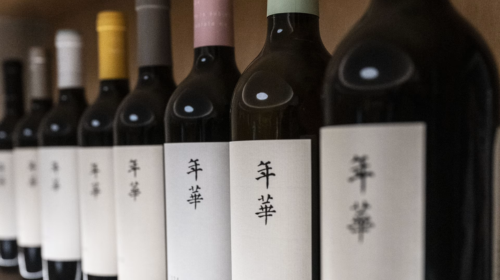 banned the consumption of alcohol at Chinese government and Communist Party events. Chinese officials are so afraid of flouting the rules that one state-owned booze company skipped serving alcohol at a conference last year, according to media reports and a person who attended.
…
China’s drinking downturn deepened last year, when the country’s antigraft watchdog went after officials accused of mixing drinking with state business. In one highly publicized case, nine officials were disciplined when a county official in Henan province died after drinking alcohol at a midday banquet.
The Drinks Business
In this The Drinks Business article, James Bayley reports that the newly concluded Australia-EU trade deal is set to remove EU import tariffs on Australian wine once it takes effect, a move industry leaders say should improve Australia’s competitiveness in one of the world’s largest wine markets. From the article:
“The removal of tariffs on Australian wine entering the EU is good news for our exporters and for the long-term competitiveness of Australian wine in a major global market,” he said.
According to Australian Grape and Wine, the tariff change is expected to deliver around AUD $14.5 million in annual savings for the sector.
Europe already plays a substantial role in Australia’s export strategy. According to Australian Grape and Wine figures, Europe remains Australia’s largest export region by volume. In 2025, 245 Australian wine exporters shipped 76 million litres of wine worth $143 million to EU member markets.
World Airline News
In this World Airline News post, John Friebe highlights Southwest’s new push into Sonoma wine country, centered on the airline’s launch at Santa Rosa’s Charles M. Schulz Sonoma County Airport and a new Sip and Ship perk aimed directly at wine travelers. The key consumer hook is simple: starting April 24, customers will be able to check one case of wine at no extra charge from select West Coast locations, as long as it is packed in a standard wine shipping box or wine suitcase that meets checked-bag requirements.
This is very similar to the Alaska Airlines “Wine Files Free” Program.
Here is ChatGPT Comparison:
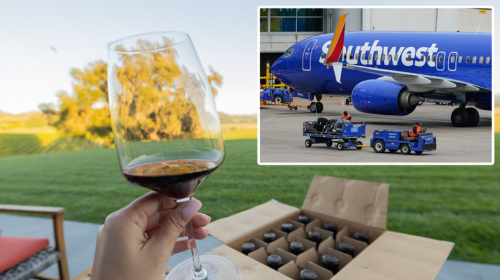 For a wine traveler, Alaska feels like the more polished wine-country perk. It is built for people who regularly fly out of West Coast wine regions and want a dependable rule they can count on. If you visit Napa, Sonoma, Walla Walla, Willamette Valley, or similar regions and fly Alaska often, it is the stronger program.
Southwest’s version feels more like a targeted promotion tied to its Santa Rosa push. That does not make it bad. In fact, it may be very useful for casual Sonoma travelers who already prefer Southwest and just want to bring a case home without extra hassle. But at least right now, it does not look as broad or as proven as Alaska’s.
Bottom line:
If you want the better overall wine-shipping airline perk, Alaska wins.
If you want the simpler no-membership option for a Sonoma trip, Southwest may be perfectly fine.


