SFGATE
In this SFGATE article, Lester Black reports that Monarch Tractor, the Bay Area ag-tech startup once promoted as a major future player in autonomous electric farming equipment, appears to have collapsed after raising more than $240 million, laying off its staff, and leaving its Livermore headquarters. The story is driven in part by a viral video from California winemaker Patrick O’Connor, who said his Monarch tractor “totally failed” after three years of testing on a steep vineyard site and described the machine as unsafe and ineffective in self-driving mode. Black also notes that Monarch had been hailed
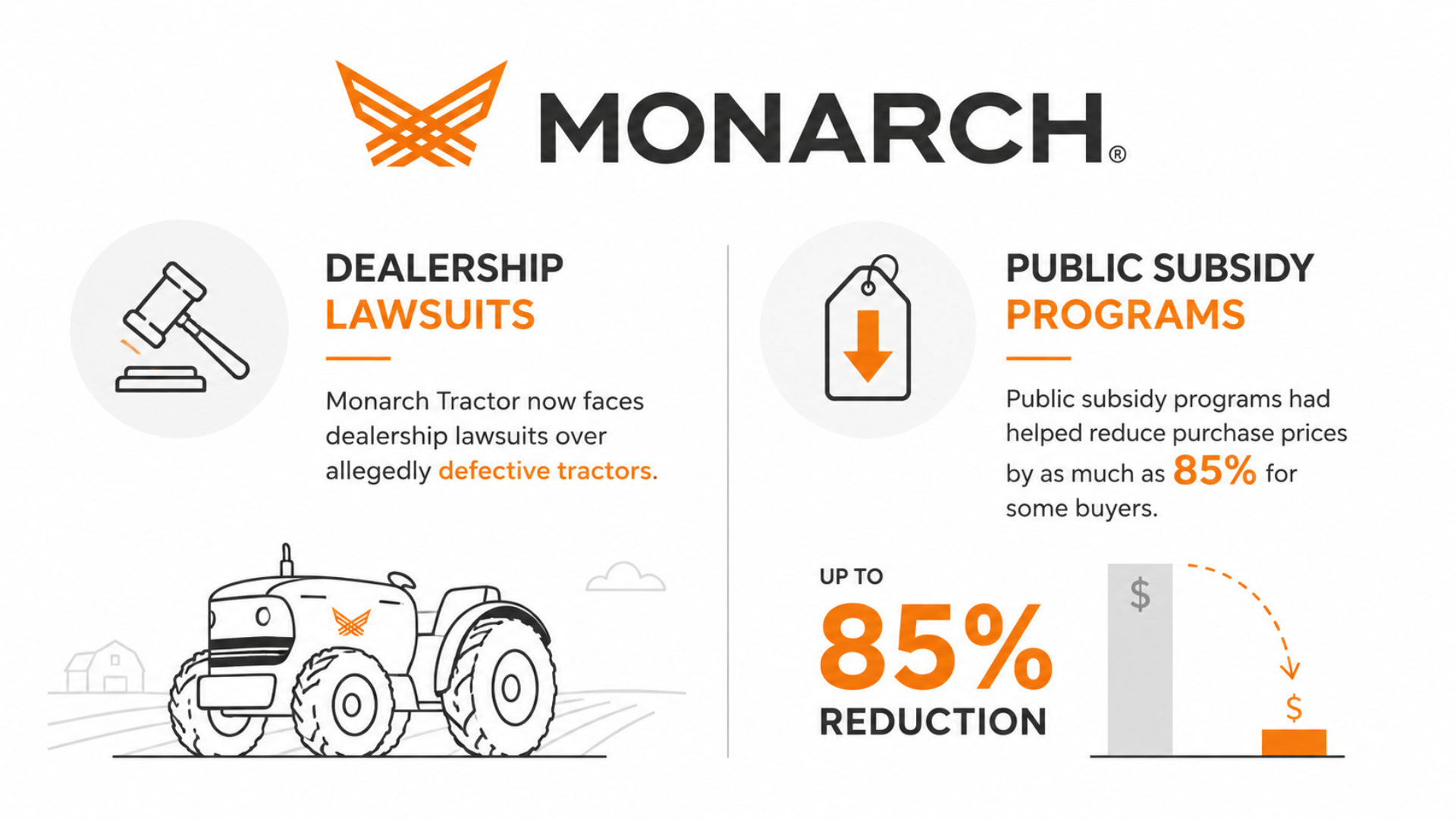
by Time and Forbes during its rise, but now faces dealership lawsuits over allegedly defective tractors, while public subsidy programs had helped reduce purchase prices by as much as 85% for some buyers. For wine-country readers, the takeaway is that one of the most visible vineyard-tech bets of the past few years may have ended not in breakthrough adoption, but in a costly reminder of how hard it is to make autonomous farm equipment work reliably in real vineyard conditions. From the article:
Monarch Tractor’s founders include Mark Schwager, a former Tesla manager, and Carlo Mondavi from the legendary Napa Valley wine family. The company did not return SFGATE’s request for comment. However, Mondavi commented on O’Connor’s Instagram video this week, saying that he had high hopes for the product but left the company a year earlier over disagreements with its CEO. He said the tractor “had real first-gen challenges, and farmers shouldn’t be the ones carrying that burden.”
“I’m genuinely sorry the tractor didn’t live up to what it should have. You and the Monarch family deserved better,” Mondavi said.
Wine Business
In this Wine Industry Advisor item, presented as a Cal Poly regulatory study release, the core finding is that Napa County wine grape growers are carrying a substantial annual compliance burden, with large growers facing more than $1,700 per acre and small growers more than $1,100 per acre in regulatory costs. The study, supported by the Napa County Farm Bureau, says those costs amount to roughly $1.7 million annually for a 1,000-acre vineyard and about $226,000 for a 200-acre operation, with regulatory expenses accounting for roughly 8% to 12% of production costs. From the article:
“Our members have said continually that regulation is driving them out of business,” said Peter Rumble, CEO of the Napa County Farm Bureau, “so we expected the findings would not be good. But this is shocking. It shows how much work we need to do at the federal, state, and local level to support agriculture. Without change, we might not have viable agriculture as we know it now in Napa, which threatens the Ag Preserve, something that defines us in many ways.”
Vinography
In this Vinography post, Alder Yarrow shares that the Old Vine Registry has passed 10,000 registered vineyards worldwide, hitting a goal originally set for 2027 roughly 15 months early. The registry, launched in 2023 as a crowdsourced effort to document vineyards older than 35 years, now spans 42 countries, covers more than 40,900 hectares of historic plantings, and includes 1,144 grape varieties. From the Press Release:
“Old vineyards are among the wine world’s most valuable agricultural and cultural assets,” said Alder Yarrow, Architect and Manager of the Old Vine Registry.
“When we launched the registry, I thought there might be tens of thousands of old-vine vineyards worth cataloguing around the world,” Yarrow said. “As the data has come in, it’s become clear that the real number may be in the hundreds of thousands. Reaching 10,000 vineyards this quickly shows how much momentum there is across the global wine community to document and celebrate these historic plantings.”
SevenFifty Daily
In this SevenFifty Daily article, Emily Cappiello looks at how very small wine retailers, often operating in less than 1,000 square feet, are using tight footprints to their advantage through sharper curation, more intentional merchandising, and stronger neighborhood identity. The central idea is that 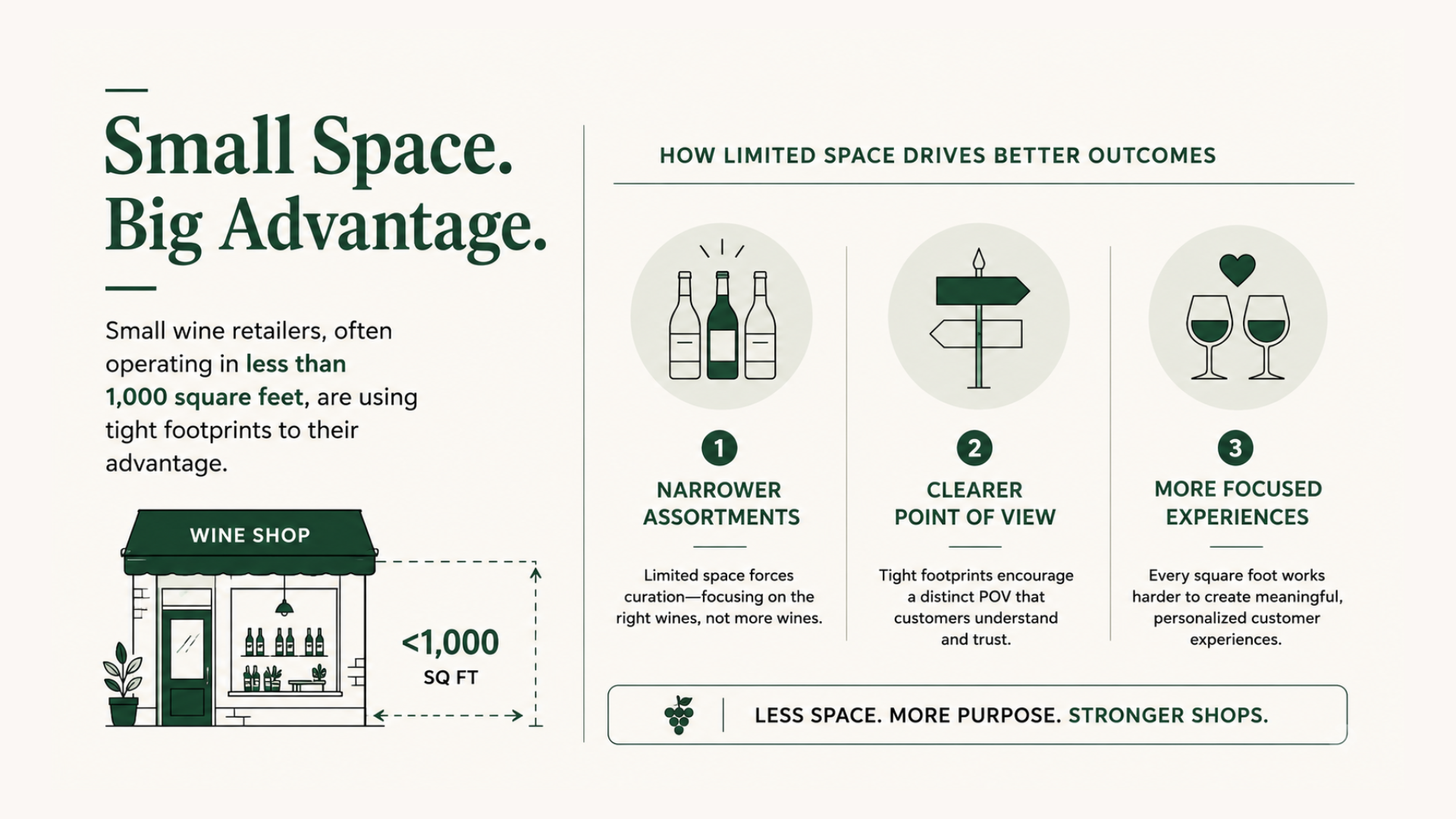 limited space can force discipline, pushing shops to narrow their assortments, clarify their point of view, and create more focused customer experiences rather than competing with large-format retailers on sheer selection. The article focuses on 4 wine shops. From the article:
Across all four shops, the pattern is clear: Niche is not exclusionary—it is magnetic. Rather than attempting to serve every possible wine drinker, these stores define their lane and invite customers into it. And in many cases, that magnetism is reinforced by scale. Smaller purchase quantities mean limited availability. Customers understand that if they love something, it may not be there forever, which subtly encourages both repeat visits and multi-bottle purchases.
In tiny shops, there is no room for filler inventory. Every bottle must justify its place on the shelf, a constraint that reinforces discipline and builds customer confidence. Restraint, however, does not mean rigidity. Lovenworth explains that she curates for discovery, reliability, or education as “the most successful programs are always some combination of those three,” she notes.


