
The Drinks Business – Fine Wine Demand Surges In Key Latin American Markets
In The Drinks Business, writer Rupert Millar reports that fine-wine demand is surging across key Latin American markets, with several countries posting double-digit growth in premium imports even as traditional markets like the United States and parts of Europe soften. Producers point to a rapidly expanding middle class, younger affluent consumers, and strong interest in expressive, fruit-forward styles as the main drivers behind this rise.
From the article:
Between 1960 and 2010 in the U.S. alone—what quickly became the world’s biggest and most powerful wine market—wine consumption rose from 0.90 gallons per person or 53 million total table wine gallons to 2.57 gallons per person, or 707 total table wine gallons, according to the Wine Institute.
That’s an increase of 1,233.96% in total wine consumption over 50 years. But.
Then the growth levelled off. Last year, the U.S. consumed 2.54 gallons per person, for a total of 717 million overall, down from 2.65 gallons and 764 gallons, respectively, in 2023.
The type of growth seen in the US between 1960 and 2010 is now being seen in LATAM:
Meliza Jalbert, director of international sales at Hope Family Wines in Paso Robles, CA, says the growth across Latin America has been “notable” as they “invest in digital storytelling and influencer engagement.”
Puerto Rico and Ecuador in particular are showing notable growth this year at 9.5% and 28% respectively, while Mexico remains the largest distribution market in the LATAM zone for Hope.
Wine Spectator – 13 Things That Might Surprise You About Prohibition
In Wine Spectator, Emma Balter and Mitch Frank walk through 13 surprising angles on Prohibition, from its unique status as the only repealed amendment to the way it distorted California grape growing, decimated terroir-driven wine, and left behind the messy patchwork of alcohol laws we still live with today. They trace how women’s temperance activism, racism and xenophobia, loopholes for medicinal and sacramental alcohol, home winemaking, and post-Repeal politics all combined into a “Noble Experiment” that failed spectacularly but permanently reshaped the American wine landscape.
From the article: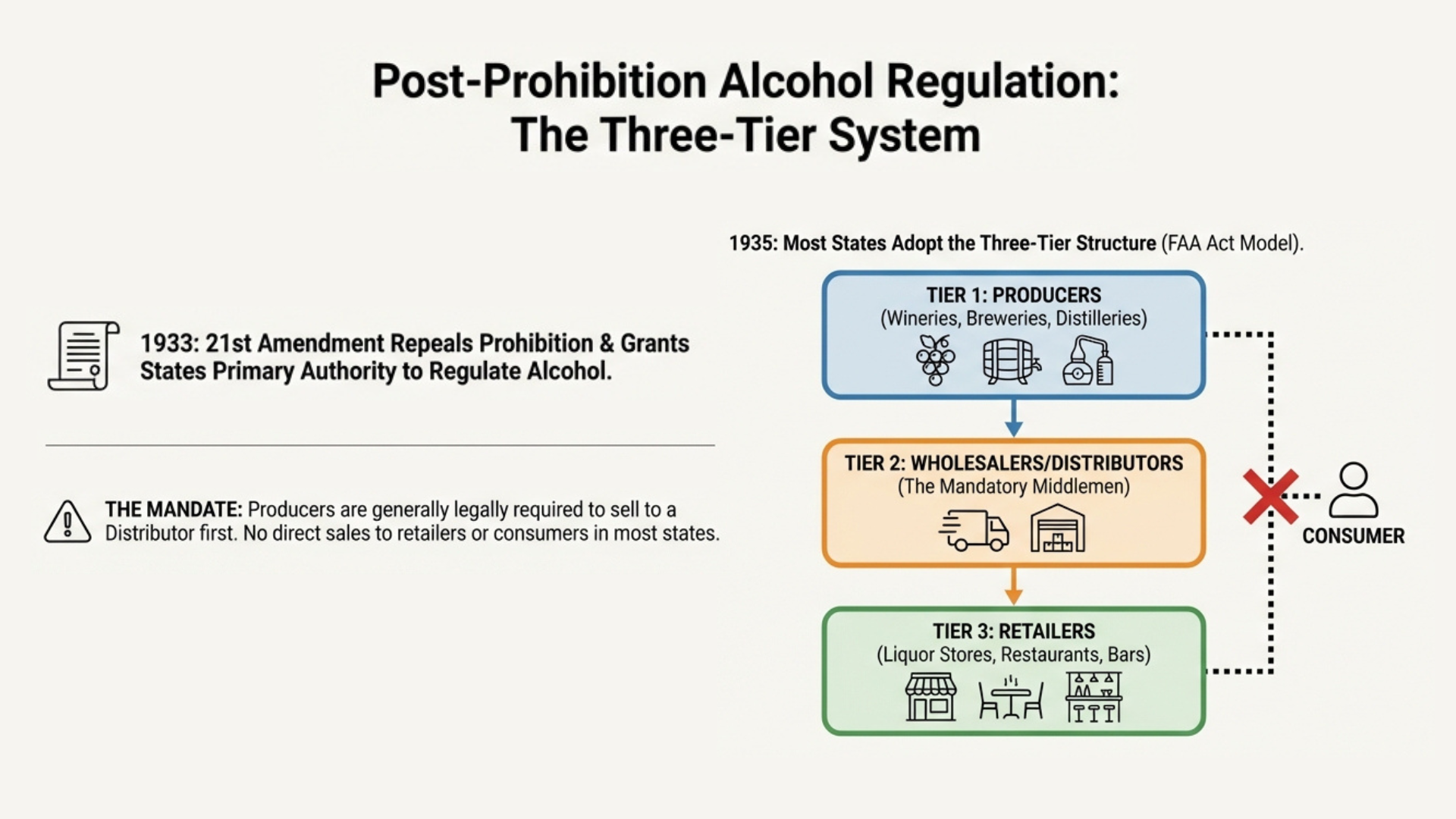
It’s hard to imagine that once there was a time when you couldn’t enjoy your favorite tipple (well, legally, at least). Dec. 5 is Repeal Day, and 2025 marks the 92nd anniversary of the repeal of Prohibition, a nearly-14-year federal ban on booze that seemed like a good idea to some people at the time but ended up causing quite the mess.
The actual act of consuming liquor was not what the 18th Amendment banned. Instead, it prohibited the “manufacture, sale or transportation of intoxicating liquors,” so you could technically drink all you wanted, but the means by which you obtained that liquor were probably illegal.
President Woodrow Wilson had a personal wine cellar in the White House, but by the time he left office in 1921, Prohibition was the law of the land. As if moving weren’t stressful enough, he had to figure out how to transport his wine to his new digs. Luckily, he was granted an exemption from Congress. Must be nice to be president.
The Drinks Business – Bulk wine defies market downturn
According to The Drinks Business, despite a broader slump in global wine consumption and falling volumes industry-wide, the bulk-wine segment is showing unexpected strength. Attendees at the recent World Bulk Wine Exhibition (WBWE) reported resilience in demand for bulk wine, even as bottled wine struggles.
From the article:
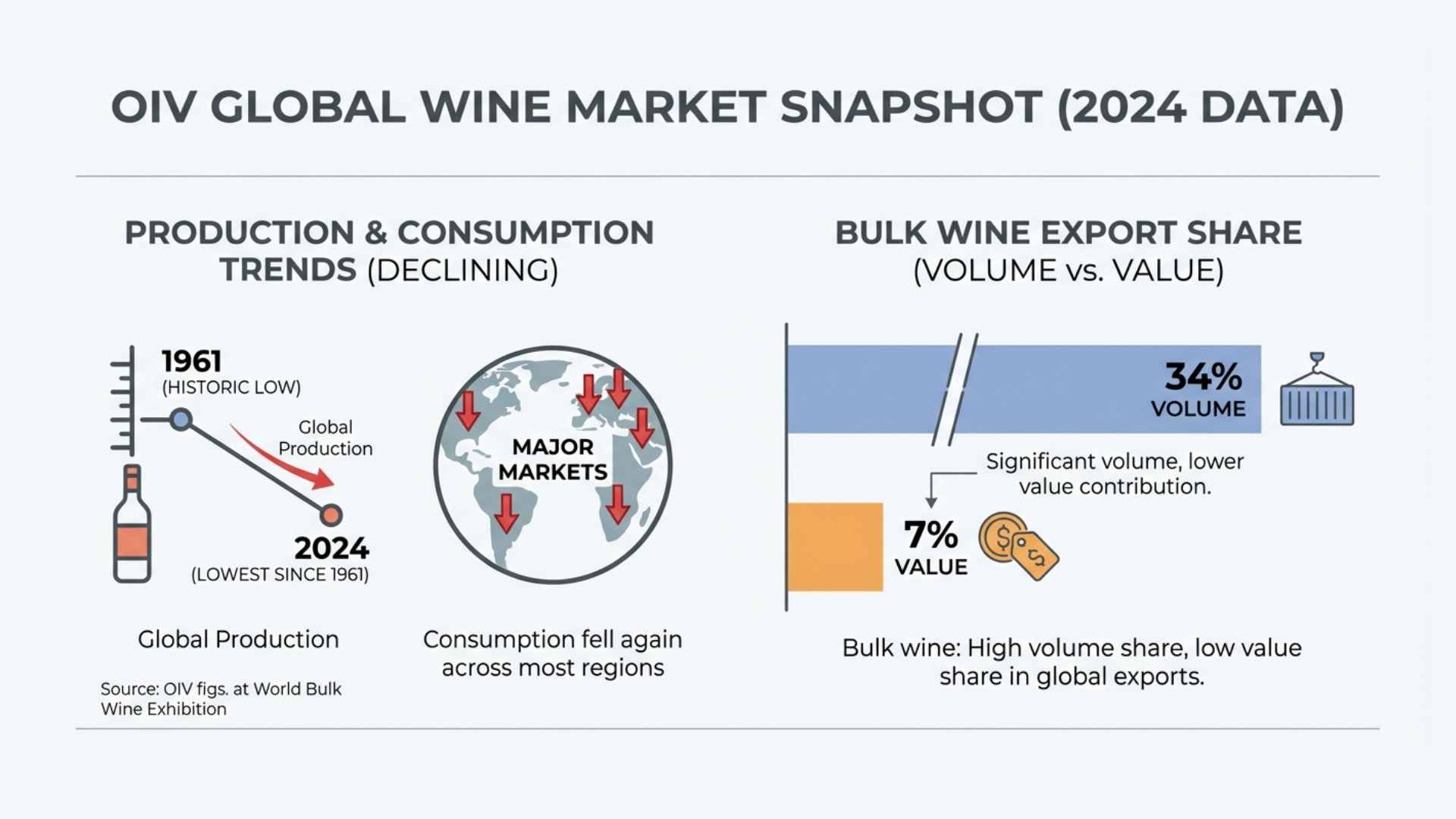 At the recent World Bulk Wine Exhibition (WBWE)… figures presented at the fair confirmed that 2024 marked the lowest global production since 1961, while consumption fell again across most major markets. Despite this, bulk wine now represents 34% of global export volumes, though just 7% of export value — a gap exhibitors say is narrowing as premiumisation reshapes the category.
“For years bulk was seen as the dumping ground of the industry,” one producer told db. “That’s no longer the case.” Buyers at the fair noted an increase in high-quality wines being offered in bulk, driven in part by oversupply in countries such as the US and Australia.
Robb Report – Should the Government Bail Out the Wine Industry?
In Robb Report, Mike DeSimone and Jeff Jenssen examine whether the U.S. government should intervene to support an increasingly distressed wine industry, as France and other European nations already have. They outline the scale of economic damage caused by declining consumption, oversupply, climate impacts, tariffs, and foreign bulk-wine competition, contrasted with France’s aggressive multi-year funding for vine removal and crisis distillation. While some California leaders push for regulatory relief over subsidies, others argue that wine’s cultural and economic value makes a strong case for federal action before more growers and multigenerational operations disappear.
From the article:
Home to 5,900 grape growers and 6,200 wineries, California is the fourth-largest wine producer in the world (behind Italy, France, and Spain) and is responsible for more than 80 percent of the wine made in the United States. Employing 422,000 people in the state of California, 1.1 million Americans across the country, and paying $59.9 billion in wages annually throughout the United States, the economic importance of California’s wine industry to the state and the nation cannot be overstated. While the U.S. Department of Agriculture has a program that assists grape farmers whose crop is affected by disease, there is no financial support for those who are ripping out their vines for the simple fact that they can no longer make living growing wine grapes.
Truffle Pig Winery in Temecula, CA
Reborn from the former Avensole estate, Truffle Pig Winery pairs Temecula Valley hospitality with a fresh, site-first wine program led by winemaker/partner Olivia Bue and a seasoned ownership team spanning Temecula and historic Cucamonga roots. The result: a polished reboot with real potential, especially for Italian- and Rhône-leaning varieties. Read our Temecula Valley AVA Guide for regional context.

A concentrated, full-throttle G2 that leans into black-fruit power and spice. The structure and length are here, but the elevated alcohol and ripe tone make it feel less precise than top-tier Saxum vintages.
Il Refettorio – Conca dei Marini, Italy

Il Refettorio delivers Michelin-starred Mediterranean cooking on a terrace overlooking the Amalfi Coast inside a restored 17th-century monastery.