
When we learned that Sal was a one-man show down here in the Valley, we couldn’t wait to try his wines and learn how he does all of this himself.
The story of Rombi Wines began in 1993 when Salvatore Rombi purchased a steep hillside property with the intent of planting a vineyard. What started as a plan for a retirement project eventually evolved into a meticulous commercial endeavor. Rombi cleared the land himself, terracing the slopes to prepare the soil for viticulture. The scale here is intentionally diminutive. With a total production hovering around 100 cases annually, this is one of the smallest bonded wineries in the region. The project is defined by patience and slow growth, allowing the estate to focus entirely on quality farming rather than volume.
Salvatore Rombi defines the term “hands-on.” He is the sole operator of the business, a rarity in an industry where vineyard management and winemaking are often separate roles. Rombi prunes the vines, drops fruit to concentrate flavors, manages the canopy, and harvests the grapes. In the cellar, he oversees fermentation and aging with the same attention to detail. This total control allows him to make precise decisions based on the vintage. A notable example of his adaptability is the 2016 Cabernet Sauvignon. Despite the Soberanes Fire affecting the region, Rombi vinified the fruit, resulting in a wine with a distinct, smoky profile reminiscent of Islay scotch or mezcal. It is a testament to his refusal to let a difficult vintage go to waste.
 The Property
The estate vineyard is located on a ridgeline at an elevation of 1,650 feet, well above the fog line. This position ensures long hours of sunlight, while the steep gradient provides necessary drainage. The planting is precise and compact, consisting of exactly 14 rows of Cabernet Sauvignon, seven rows of Merlot, and just two rows of Petite Sirah. These vines struggle in the thin soils, producing small berries with high skin-to-juice ratios, which translates to wines with firm tannin and deep color.
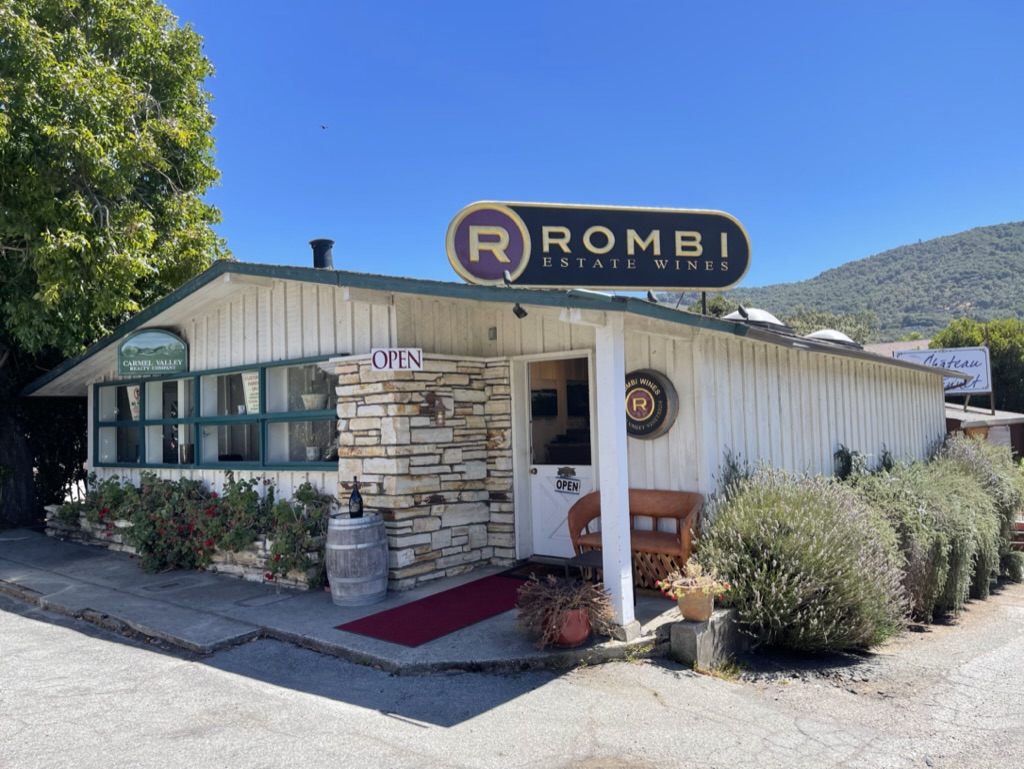
While the vineyard hosts a private guest house available for rent, the public face of the winery is the tasting room in Carmel Valley Village. Located at 1 Center Street, the room is modest and focused, stripping away the pretension often found in larger hospitality venues to keep the emphasis squarely on the bottle.
The tasting room is open on weekends, usually from 12:00 PM to 5:00 PM. Reservations are not required, and the atmosphere is casual and educational. The tasting fee is approachable at approximately $10. Visitors will almost always find Salvatore Rombi himself behind the bar. He guides guests through the current flight, which might include his estate Merlot or the highly rated Petit Verdot, a sourced wine that has garnered critical scores up to 94 points. The experience offers a direct connection to the winemaker, providing context on the farming decisions and the specific character of the vintage in the glass.
Rombi Wines offers a stark contrast to the corporate winery model. It is a place where the personality of the winemaker and the character of the land are inextricably linked. The wines are big, structured, and unapologetic, much like the effort required to farm the steep hillsides they come from. For those who appreciate dense, savory reds and the opportunity to speak directly with the person who grew them, Rombi remains a compelling stop in Carmel Valley.