Wine-Searcher
In this Wine-Searcher article, W. Blake Gray covers a blunt assessment from Ted Hall, owner of Long Meadow Ranch and former Robert Mondavi Winery chairman, who argues that Napa Valley has too many wineries chasing the same luxury Cabernet model. Hall’s core point is 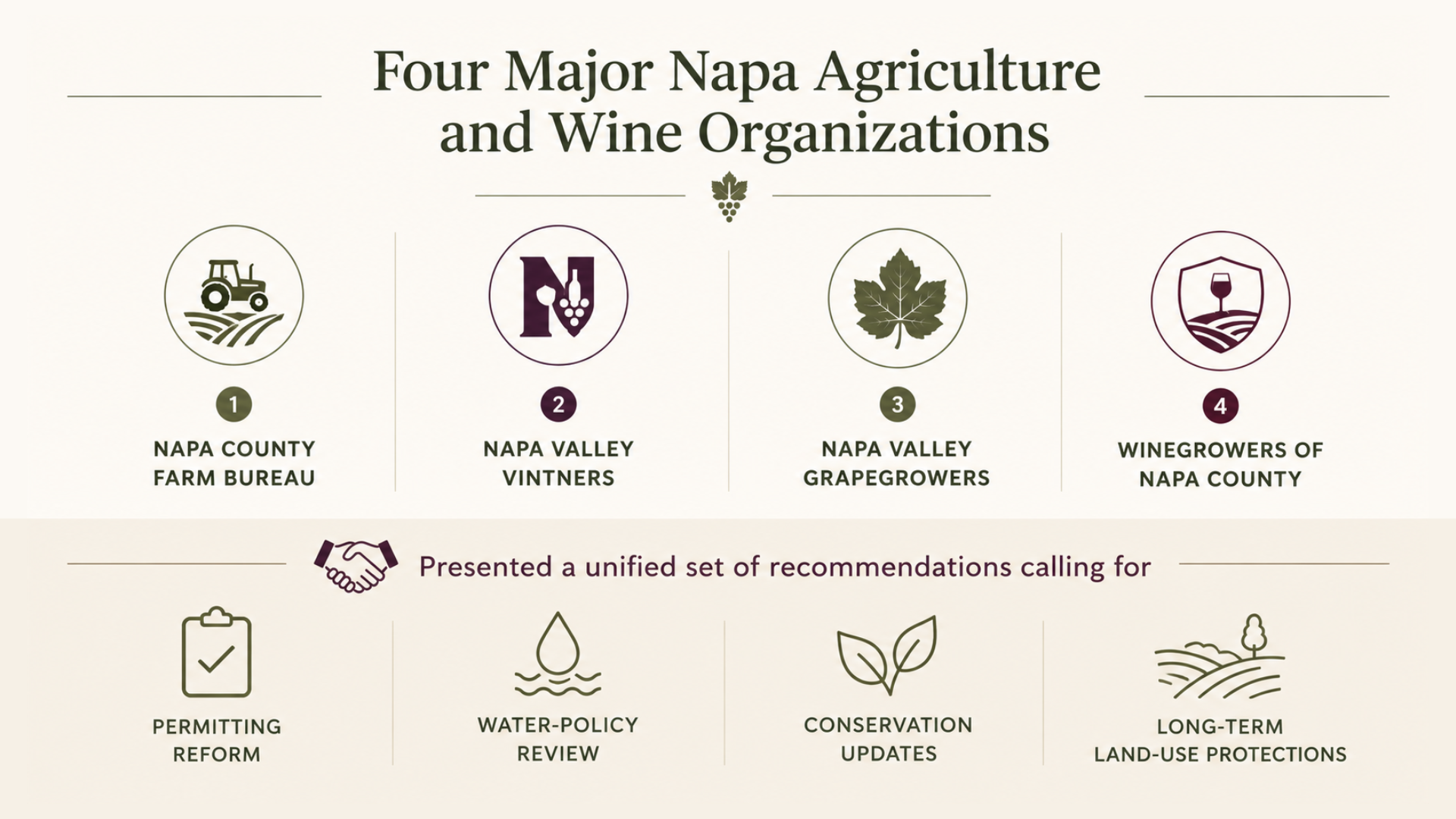 that many small Napa producers are built around $100-plus Cabernet, but the market is not large enough to support them all, especially as global wine sales soften and unsold inventory piles up.
He points to wealthy outside owners who buy wineries for lifestyle, status, architecture, legacy, or personal fulfillment rather than disciplined business reasons.
From the Article:
Other analysts have said for some time that California has too many wineries. But I haven’t seen blunt language like Hall’s specifically about Napa: that 100 to 170 of Napa’s 400-plus wineries should get out of the business.
“Napa needs to work through something like 35 to 40 exits, reversions, mergers, or major restructurings a year for the next three years,” Hall writes.
Wine Enthusiast
In this Wine Enthusiast Podcast episode, writer-at-large Matt Kettmann interviews Norah Jones about her new wine project, “This Life,” created through her part-ownership and collaboration with French winery Maison Wessman. The piece frames Jones not as a technical wine expert but as someone who approaches wine the way she approaches music: through taste, mood, feel, and instinct. Kettmann notes that he reviewed Jones’ This Life 2024 Crémant de Limoux and gave it 91 points.
From the Article:
Now, Jones isn’t representing herself as a technical wine expert here—her focus is more based on taste, mood, and gut feeling. In that way, she views the business quite similarly to how she approaches music. There’s overlap between the two art forms, and “This Life” seeks to draw a line between them: the rosé and crémant are marketed as “a melody in every glass.”
Wine Business
WineBusiness reports that a California appeals court has paused a judgment requiring Hoopes Vineyard to pay nearly $4 million while the case continues through the legal process. The dispute centers on Napa County’s enforcement action against Hoopes Vineyard, a small Oakville winery that has been fighting the county over use-permit and compliance issues.
I think the thread here is that Napa is being squeezed from multiple sides. The Ted Hall story says the valley may have too many wineries chasing the same luxury model. This one shows the regulatory and legal side of operating in a place where every winery is also part of a tightly controlled agricultural zone. Whether the issue is market saturation, wealthy ownership, or county enforcement, the message is the same: Napa may look glamorous from the outside, but running a winery there is becoming more complicated, expensive, and risky.
From the article:
“This case gets to the heart of the Constitution’s protection against excessive fines,” said Pacific Legal Foundation attorney Bridget Conlan, who represents Hoopes, in a statement. “The government cannot impose crushing penalties on small business owners like Lindsay Hoopes for lawful conduct. Courts have a duty to ensure that fines are proportionate and respect fundamental rights.”
Wine Industry Advisor
Four major Napa agriculture and wine organizations, Napa County Farm Bureau, Napa Valley Vintners, Napa Valley Grapegrowers, and Winegrowers of Napa County, presented a unified set of recommendations to the Napa County Board of Supervisors. The groups called for permitting reform, water-policy review, conservation updates, and long-term land-use protections intended to keep agriculture economically viable in Napa County.
From the article:
“Agriculture is the economic and cultural foundation of this county — more than $11.7 billion in annual economic benefit, over $500 million in local and county taxes, and nearly 72% of the local workforce. We came before the Board today as stewards of both industry and community, offering practical solutions that balance meaningful change with the land use values that have defined Napa since the Ag Preserve was established nearly 60 years ago,” noted Caleb Mosley, Executive Director of the Napa Valley Grapegrowers.


